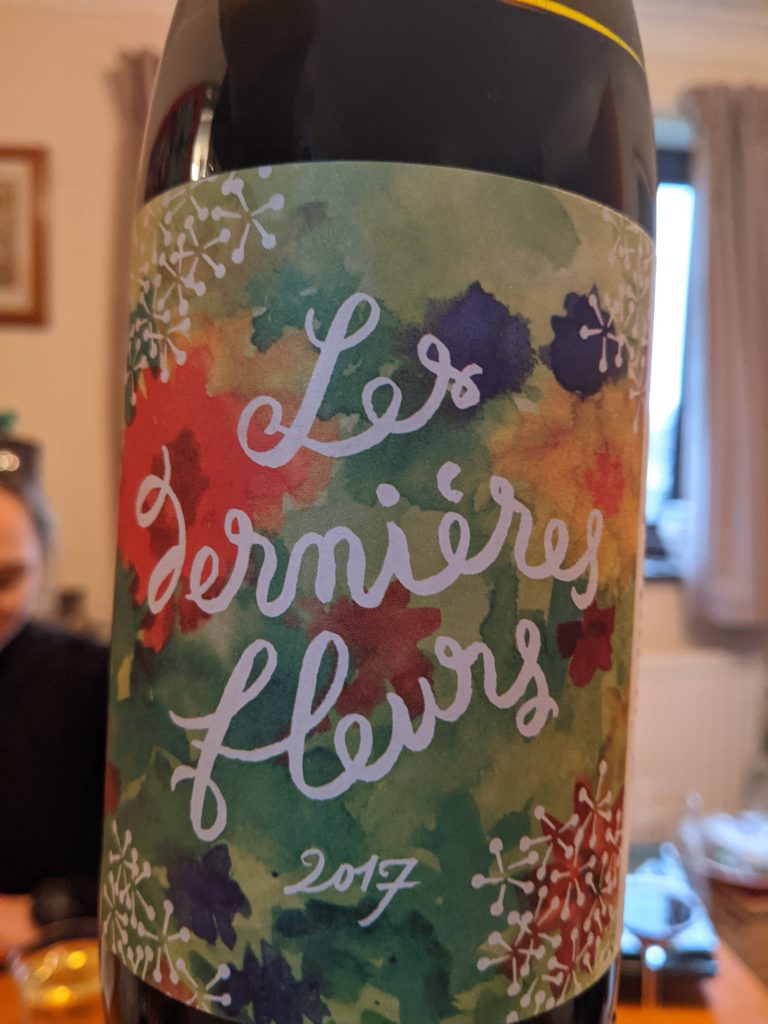
This is a low-intervention Bordeaux. It has also been fermented in stainless steel, and then aged in large barrels (500 litres), which are larger than the usual barriques (c. 225 litres) used in Bordeaux. Both of these mean that there should be less oak influence than usual in a Bordeaux.
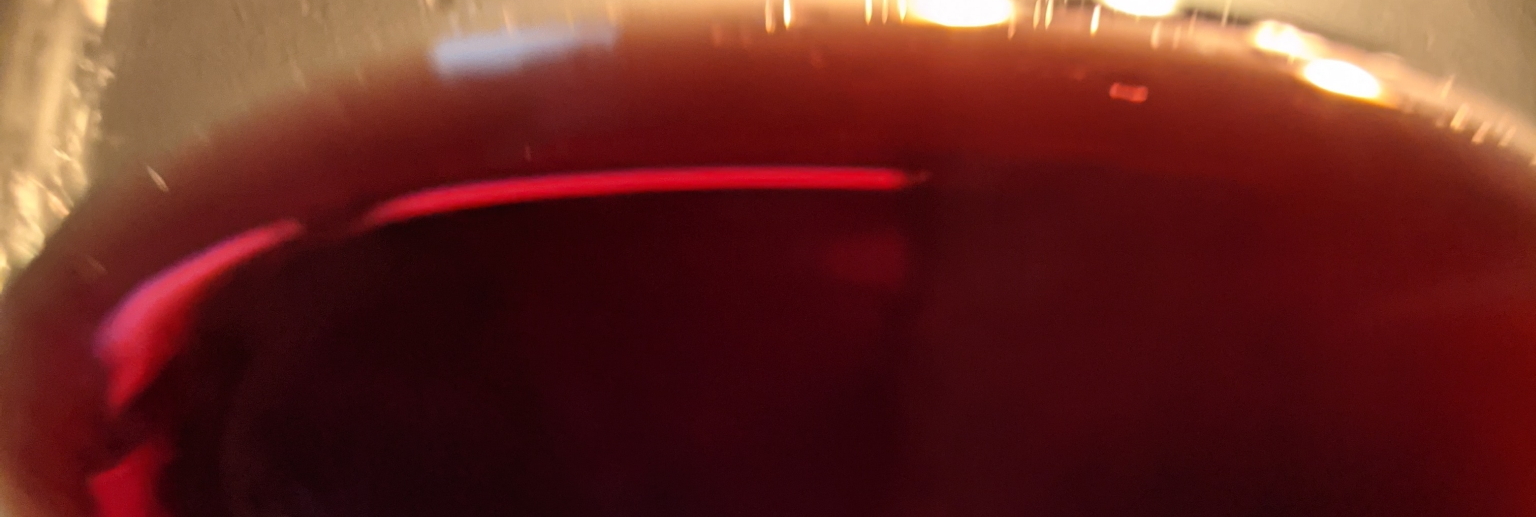
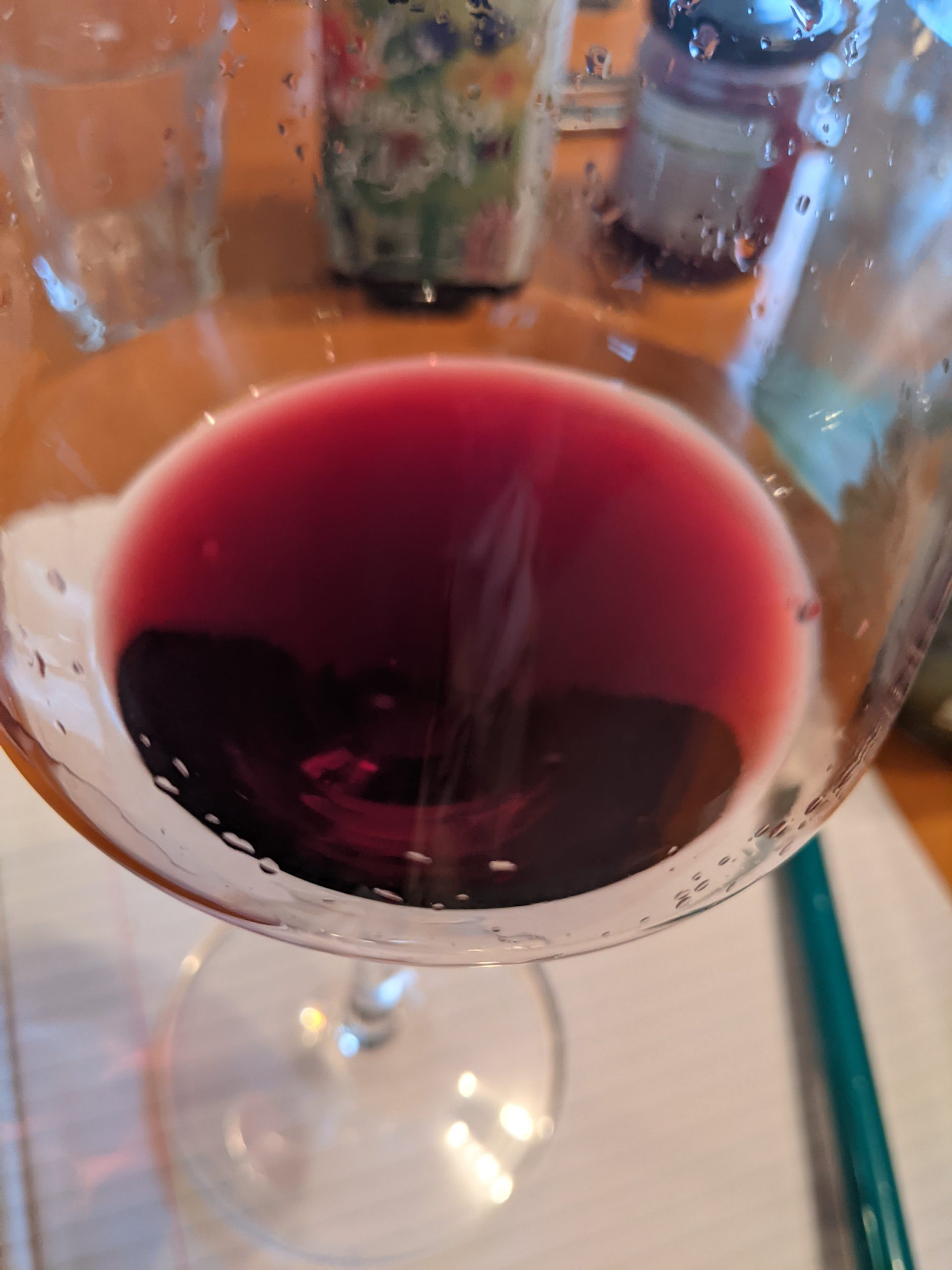
In the glass: Ruby, clear, medium to light. At first I think I see hints of cloudiness, but holding it up to a stronger light, they are less apparent, which is why I went with clear. TY suggests ‘clear with a hint of cloudiness.’ See the Sustainability section below. It’s a nice-looking wine, but one that I can’t get too excited over. I’m not tempted to twirl the glass in the sunlight to see what happens.
Sounds: Well, this time, it’s weird. There are hisses, glugs, and then a thin, steady stream falling into the glass, with resulting sounds and associations. Especially when the streams sort of trickles to an end. That’s because I’m using a Coravin, so haven’t actually pulled the cork on the bottle. Useful thing, the Coravin, as it lets you sample wines without opening the bottle, thus preserving the rest of the wine. Although the sounds leave something to be desired.
The nose is definitely red fruits. Darker red fruits perhaps. My notes then say ‘v. light hint of fruit.’ I have no idea what I meant by this. Perhaps dark fruits? TY calls it a ‘lovel smell’ and ‘like plunging your face in a punnet of ripe raspberries.’ That’s not something I tend to do, so I couldn’t possibly comment.
The palate. I’d go with a light to medium body on this one. Although it’s a dry wine, the freshness of the red fruits give it almost a hint of sweetness. Raspberries for flavour, with a hint of strawberry.
My first impression on letting it sit in the mouth for a few moments is of roundness. It’s not a big roundness, but a pleasing one. It’s a very soft wine, with nice acidity. The tannins are also soft. (That seems to be a key word in this review.) It has a medium-length finish. It’s persistent in a pleasant, but not complex way, and the tannins linger unobtrusively around the edges.
Rating: I give this one a yummy bordering on yummy+. I go back and forth. But I’m at odds with TY and S, another guest dragooned into providing feedback. TY says she enjoyed drinking it, but isn’t left wanting more. She calls it yummy-minus. S more or less concurs. For me, it’s a nice, refreshing light-ish red wine. I could drink more of it, easily. My notes say ‘If all Bordeaux were like this, I could drink a lot more of it.’ Generally, I’m not a huge fan of affordable Bordeaux. There’s nothing wrong with them, they just aren’t my thing. I’ve have some absolutely gorgeous wines from the region, but they tended to be the sort of thing that had been cellared for a decade or two.
Sustainability: Organic, with a ‘natural approach to vinification’ according to the tech sheet. Non-fined and filtered. Minimal SO2 added. The non-filtered and fined suggests that the initial view of the wine as somewhat cloudy could well be correct, and I just managed to convince myself it wasn’t.
Other stuff: Apparently, Chateau Brandeau are using Toby, a percheron, in their work. This – using a horse – is increasingly common among winemakers concerned about the environment.
The technical info and such: 13.3% ABV. 80% Merlot 20% Cabernet Franc. c. £12.50, from Frederic’s, a small shop in Cambridge, who don’t seem to have a website.