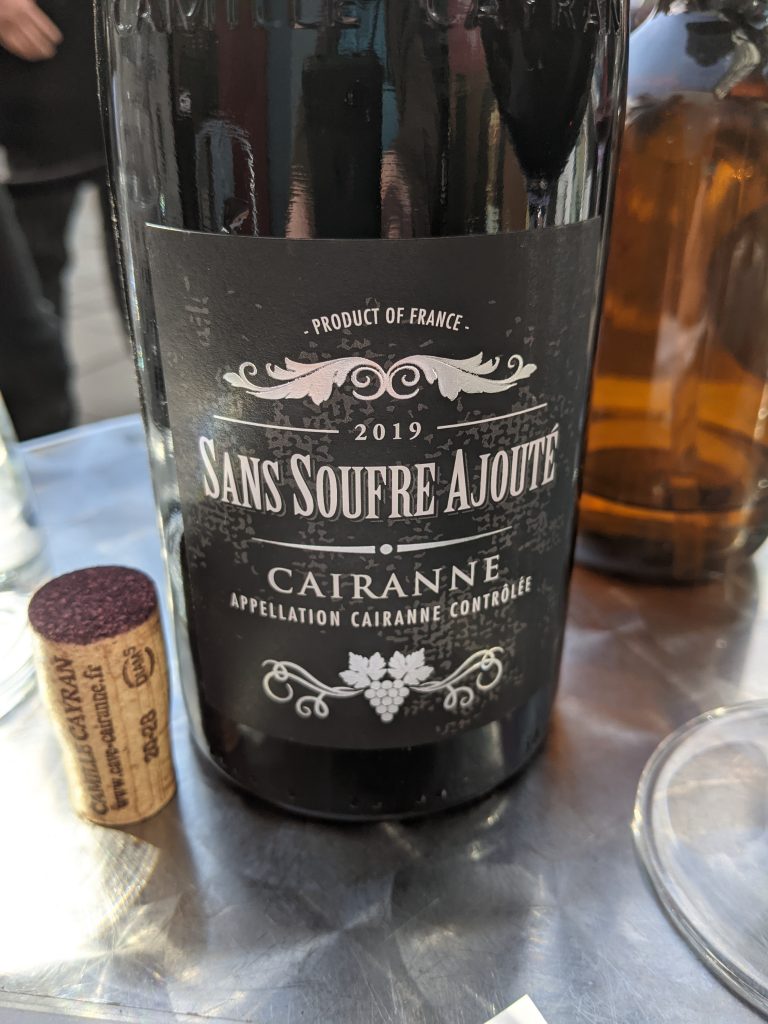
Cairanne Sans Soufre Ajoute is a no-added sulphites wine from the Southern Rhône. There are still sulphites, since wine produces them anyway, but none have been added, which means (in theory at least) there’s more opportunity for the wine to do its thing. The wine is alive, as low-intervention advocates would say. It could make for a more interesting wine, but also gives more opportunities for things to go wrong.
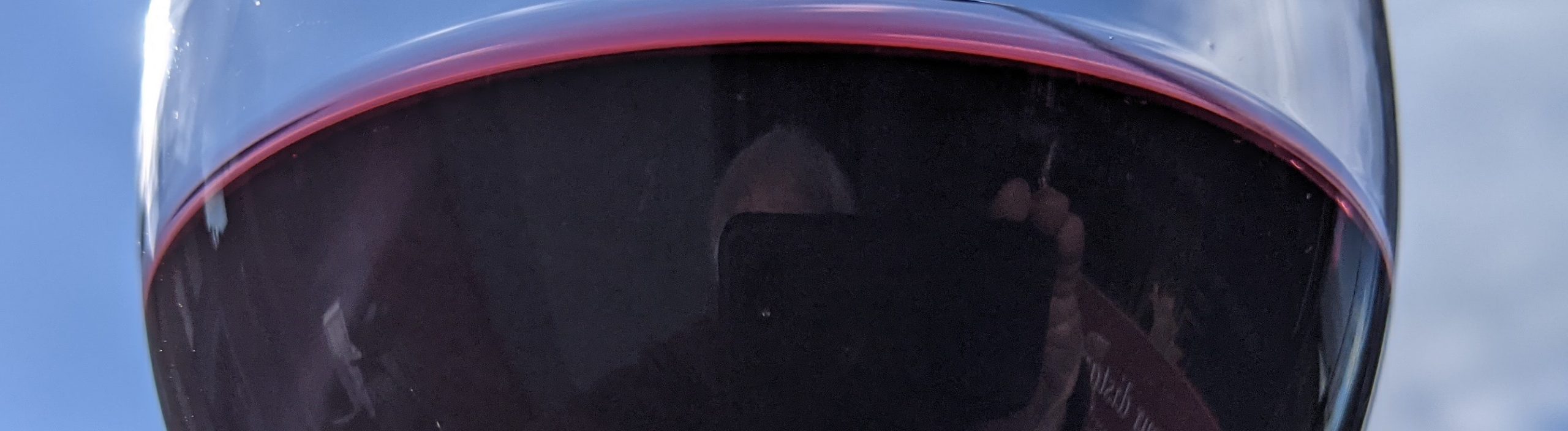
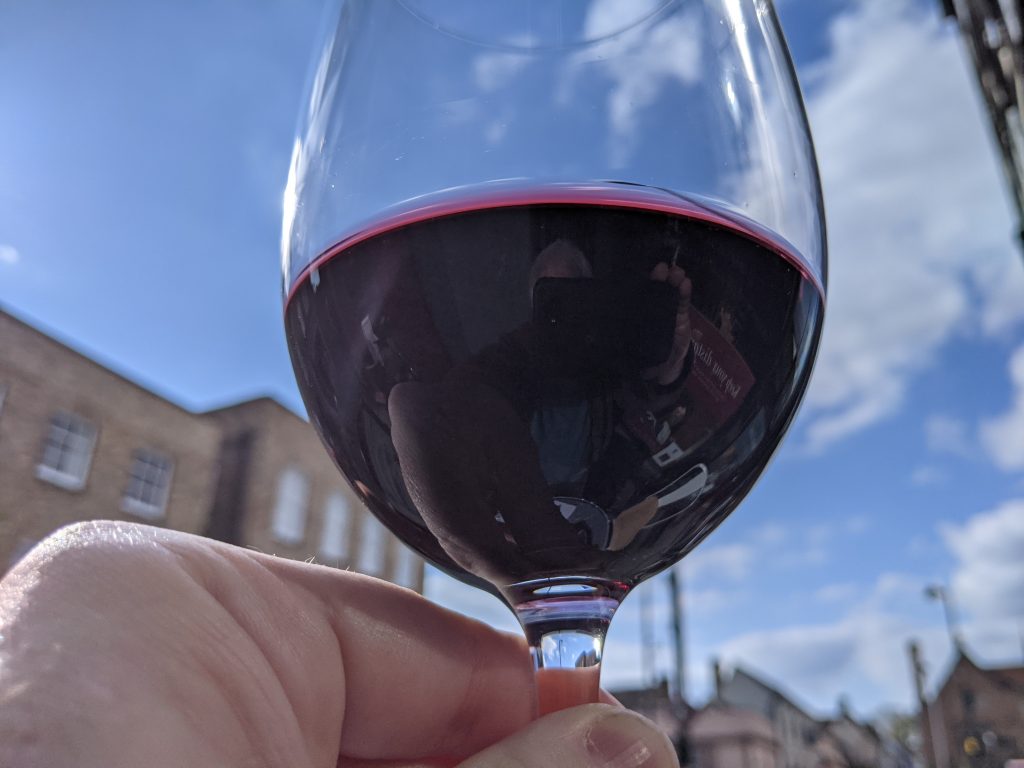
In the glass, it’s deep purple. I’ve spent way too much time trying to come up with a pun or clever reference to Deep Purple, and have failed miserably. As you might be able to tell from the photos, I had this wine sitting outside at a wine bar. A friend / colleague, let’s call him ‘D,’ who was working referred to the wine as ‘squid ink.’ That also works as a description.
I’d say there’s some cloudiness in the glass – like smoke on the water, perhaps? (see, it just doesn’t really work, does it?) – but honestly, it’s such a dark wine that it is hard to be definitive. This might be yet another case of me expecting to see cloudiness in a low-intervention wine, and so wishing it there, as it were. (And, while it is just about impossible to find information on the winemaker, apparently this is a filtered wine, so not completely low-intervention.)
The nose is dark. Some sort of dark fruit is my initial reaction. Whatever it is, it is fairly pronounced. I eventually decide that it reminds me of that Soviet-era plum compote that came in those big jars. But I recognise that some readers might not have experience with Soviet / early post-Soviet consumer products, so that might not be the most helpful smelling note. (Younger readers may wish to ask their older relatives about that thing called the ‘Soviet Union.’ God, I’m getting old.)
TY eventually rocks up, and declares that the nose is ‘balsamic’.
The palate. I’m going to call this a medium+ body. So, more than medium, not quite as full bodied as other full-bodied wines can be. It still dark fruits in terms of taste, and I can’t do much better than my Soviet plum compote. The tannins are soft, not at all intrusive. They do have a tendency to linger, but not in a negative way. Despite it being 15% ABV, the alcohol isn’t really noticeable. At least in a tasting sense. There’s no real heat or burn from it. It does, however, still have an effect when you drink too much, but sacrifices must be made for the sake of wine reviews. It has a medium finish, nothing to get too excited about, but definitely nothing to complain about.
Apparently, I didn’t bother to write down what TY said about the wine. Whoops.
Rating: I’m going to go with a straight yummy on this one. It’s a pleasant, drinkable wine. If you didn’t know it was a no-added sulphites wine, you probably wouldn’t peg it as one. I think that’s important to note since such wines do have a reputation (sometimes deserved, sometimes not) of being a bit funky and an acquired taste. This is a good wine to show sceptics.
Sustainability: Can’t really find any information on this aspect, sorry.
Other stuff: Cairanne is a Cru level of wine in the Southern Rhône Valley. In the French classification system, it’s a more restrictive classification than either the general Cotes du Rhone or the Villages level. This should mean a higher-quality wine (whatever that means), as such a classification tends to come along with more restrictions and regulations about growing grapes and making wine.
Camille Cayran is part of Cave de Cairanne, apparently, but is otherwise difficult to track down information on.
The technical info and such: 15.0% ABV, Grenach (50%), Syrah (30%), Mouvedre (20%). This one’s from Cambridge Wine Merchants, and costs, £12.99