This is part of an occasional series of posts about ideas, terms and concepts in wine that impact, but go beyond, wine tasting itself.
When your sense of smell goes, so does your sense of taste to an extent. Think of having a stuffy nose, and how that often makes food taste different. In other words, a large proportion of what we commonly call taste is actually smell. Put simply like that, you may think ‘yeah, I know that already.’ But let’s think about the implications in terms of wine.
Let’s start with a bit of clarification. Flavour is the term that people who study this sort of thing use to talk about the combined impacts of taste and smell. Taste is what your taste buds pick up: sweet, sour, salt, those things. Flavour is the overall experience, of which taste is just one part. If we want to put it in the normative wine tasting terms, we wouldn’t be too wrong to say flavour is what gets discussed under ‘palate.’ Another part of flavour – what people often also refer to as taste, if they aren’t specialists – is smell. And here things get a bit complicated, but also interesting. (I’ll use taste loosely here, since it seems to be the more common usage among us non-specialists.)
We can talk about two slightly different forms of smell. One is called orthonasal olfaction, and the other is retronasal olfaction. The first is when you breath in. This is what we normally think of as ‘smell.’ It’s what wine people mean when they talk about the nose of a wine. Take a sniff, a deep one. What do you smell? Red currants? Bananas? Nail polish remover? That’s the ‘nose,’ and that’s orthonasal olfaction. Retronasal olfaction happens when you breathe out. That, it turns out, is a key part of flavour or taste. It’s impossible to pin down exactly how much of flavour (or taste, in the loose sense) is dependent on retronasal olfaction, but ‘a goodly chunk’ seems a safe assessment. (See Additional Readings below for more information.)
But why should we care? At least two reasons.
First: An obvious, if perhaps overlooked point. If part of what goes on in the ‘palate’ section of a wine tasting, or even just enjoying wine, like a regular person, is linked to the sense of smell, and that sense isn’t in the normative range, the palate will differ as well. That doesn’t mean you can’t enjoy a wine, just you might not get the same range of flavour that others report.
Second: (Climbs up on soapbox.) Following on from the first observation, and underlining the point of this blog, wine tasting should be more inclusive. Not just in terms of gender and ethnicity, although like pretty much everywhere else, it could do with work here. Here I’m talking about sensory diversity.
This second point goes further than those of us with a less than stellar sense of smell. Estimates on the percentages affected vary, but it is known that age can cause loss of smell. Further, 23 percent of Americans older than 40 report a changed sense of smell, and about 1 in 8 had ‘measurable smell dysfunction’ (NIH 2019). Keep in mind this was before Covid.
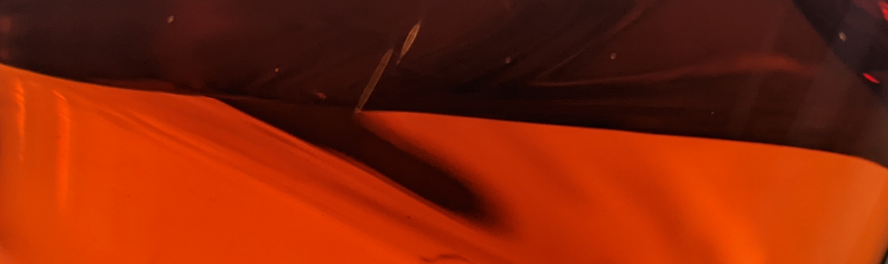
In other words, perhaps it is time we started acknowledging the true range of smells, tastes and flavours that people will or won’t find in wine. More reviews from sense-divergent people, or at least an acknowledgement that we exist, please. Quite what form this should take – apart from what I’m trying to do here – I’ll admit I’m not sure. Perhaps it could be as simple as less prescriptive tasting notes. There’s an implicit ‘to me’ when people say ‘this wine has notes of strawberries and over-ripe dead mouse.’ Maybe it is time to make that ‘to me’ explicit. Or remember to give a bit more attention to appearance. The wine industry tends to note appearance, but doesn’t really do much more. Change that. Other suggestions are welcome in the comments.
Additional Readings: (Or, stuff I consulted in writing this)
National Institutes of Health (2019) – Quick Statistics About Taste and Smell. https://www.nidcd.nih.gov/health/statistics/quick-statistics-taste-smell. Accessed 25 August, 2023.
Shepherd, G. (2012). Neurogastronomy: How the brain creates flavor and why it matters. New York, Columbia University Press.
Spence, C. (2015) “Just how much of what we taste derives from the sense of smell?” Flavour. 4:30. DOI 10.1186/s13411-015-0040-2